About the artist
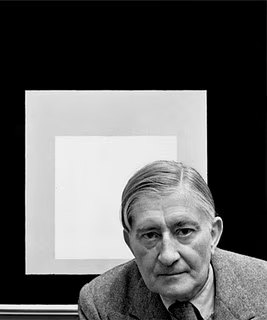
Born in Bottrop, Germany, in 1888, Josef Albers joined the Bauhaus in 1922 as a stained-glass maker and was soon teaching there, alongside Paul Klee, Wassily Kandinsky and László Moholy-Nagy.
When the Nazi regime forced the Bauhaus to close in 1933, Albers and his wife, the textile artist Anni Albers, emigrated to the United States to teach at Black Mountain College in North Carolina. His students there included Robert Rauschenberg and Cy Twombly. In 1950 he went on to lead the design program at Yale.
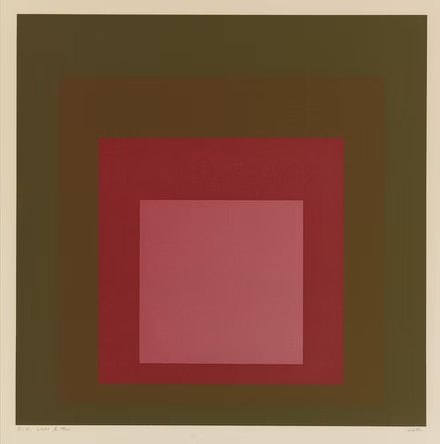
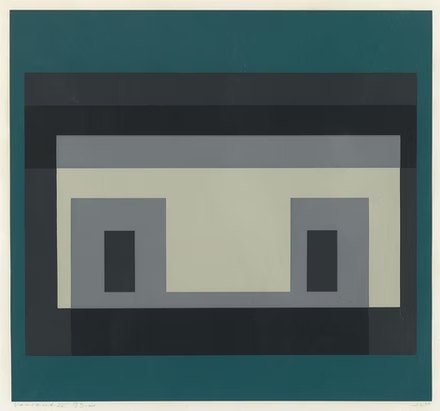
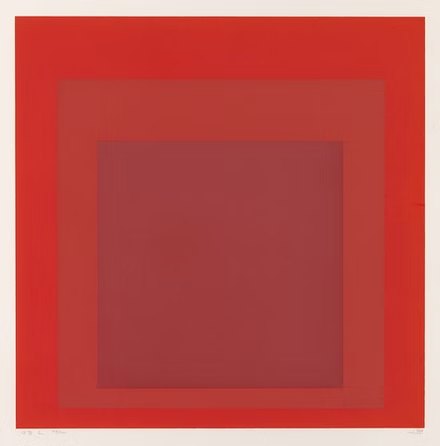
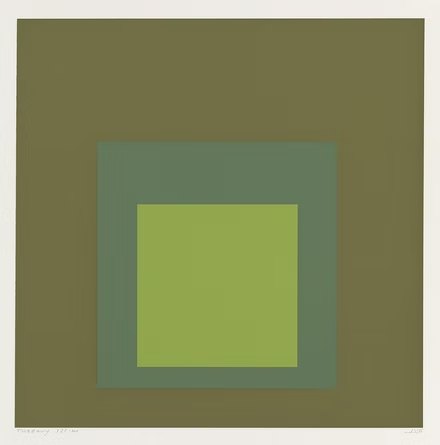
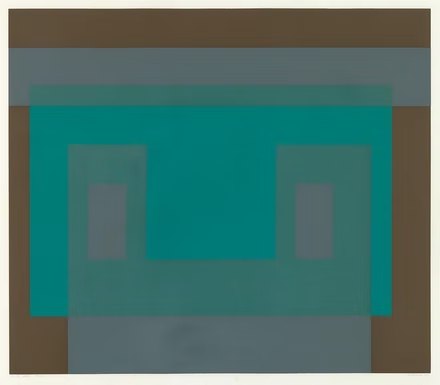
From 1950 until his death, Albers devoted himself to Homage to the Square: hundreds of paintings and prints of nested squares that show how colors change one another. His 1963 book Interaction of Color is still taught in art schools today.
- Born
- Bottrop, Germany, 1888
- Died
- New Haven, Connecticut, 1976
- Known for
- Homage to the Square
- Taught at
- The Bauhaus, Black Mountain College and Yale
- Collections
- MoMA, the Art Institute of Chicago, the National Gallery of Art and Tate